
What You Will Achieve From This Guide
# Master the Affiliate Funnel
# Target High-Intent Niches
# Create Video Content Clusters
# Scale from $15 to Four Figures
Affiliate marketing through YouTube gives an extra opportunity to earn passive income. The basic idea is simple: you recommend a product or service you actually use, and you earn a commission when viewers buy through your link. On YouTube, this works especially well because viewers can see the product in action, hear your explanation, and make a buying decision with more confidence than they usually would from a text ad alone.
YouTube also has its own official shopping affiliate program for eligible creators. Through the program, creators can tag products in content so viewers can quickly see product details and shop on the retailer’s site, and YouTube says the program is currently available in several regions. To join, your channel must be in the YouTube Partner Program and meet the subscriber threshold for YPP.
Table of Contents
What affiliate marketing on YouTube really looks like
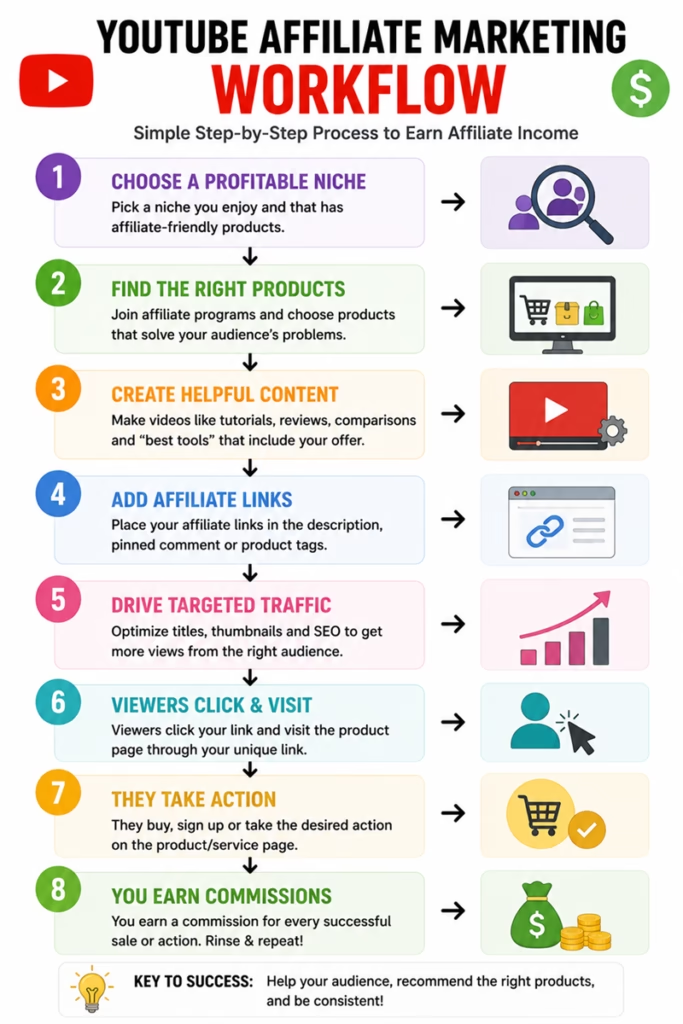
For most creators, affiliate marketing on YouTube happens in two ways. The first is the classic method: you place affiliate links in the description, pinned comment, or a related blog page, and guide viewers there with a clear call to action. The second is YouTube’s shopping affiliate setup, where eligible creators can tag products directly in content through the official program. YouTube says this helps fans discover products more easily and can increase a creator’s earning potential through commissions when fans buy on the retailer’s site.
The key difference between beginner and pro is not the link itself. It is the system behind it. Beginners usually drop links without a plan. Pros choose the right niche, match the right product to the right viewer, and build videos that naturally move people toward the offer.
Beginner stage: build trust first
At the beginner stage, your goal is not to promote everything. Your goal is to become a trusted guide in one clear niche. That means making videos that solve real problems and naturally connect to relevant products. If your channel is about YouTube growth, for example, your affiliate offers may include thumbnail tools, editing apps, mic recommendations, or keyword research software. If your channel is about tech, your offers might be cameras, headphones, laptops, or accessories.
The strongest beginner strategy is to keep your product recommendations tightly related to your content. That keeps the video useful and makes the affiliate link feel like a helpful next step rather than a forced sale.
Step #1: Choose a High-Intent YouTube Affiliate Niche
Affiliate marketing works best when the audience already wants help choosing, using, or comparing products. Some niches are stronger than others because viewers are closer to a purchase decision. Product reviews, tutorials, tech, software, finance, education tools, and creator tools often perform well because viewers are already looking for solutions.
A simple rule: if people search for “best,” “review,” “vs,” “how to use,” or “top tools,” that niche likely has affiliate potential. That means to work with a good niche with buying intent if you want to make money through affiliate marketing.
Learn how to find low-competition YouTube topics – Read this guide
Step #2: Pick products that match the viewer’s problem
Do not promote random products that are not related to your video. The best affiliate content is built around viewer intent. If your video teaches YouTube SEO, the natural affiliate angle may be a keyword tool, a thumbnail design tool, or an editing platform. If your video is about faceless YouTube channels, your affiliate stack may include voiceover tools, stock footage sites, or editing apps.
The more closely the product matches the problem, the better the conversion rate usually becomes.
Step #3: Use video formats that convert
Some video types are especially good for affiliate sales:
- product reviews
- tutorials
- comparisons
- “best tools for …” videos
- case studies
- setup guides
- problem/solution videos
These formats work because they answer a decision-making question. A viewer who watches “Best Free Tools for Video Editing” is much closer to clicking an affiliate link than someone watching a random entertainment clip.
Step #4: Place the affiliate offer naturally
You do not need to sound like a salesperson. In fact, affiliate marketing works better when the recommendation feels like part of the teaching.
A simple structure is:
- explain the problem
- show the solution
- demonstrate the tool or product
- mention why you use it
- place the link in the description or product tag
- give one clear reason to click
The best CTA is specific. For example, instead of saying “links below,” say “I’ve linked the tool I use for thumbnails in the description if you want to try it.”
Step #5: Make your descriptions and pinned comments work
On YouTube, your description and pinned comment are important support areas for affiliate marketing. They help viewers find the recommended product after they finish watching the video. If you use YouTube’s official shopping affiliate program, product tagging can also help viewers quickly scan product information while staying engaged with your content.
A strong description should include:
- a summary of the video
- the main affiliate recommendation
- a simple disclosure line if needed for your platform practices
- a clear CTA
- related resources or videos
Keep the language natural and helpful.
Intermediate stage: build a conversion funnel
Once you have some views, the next step is to turn your channel into a funnel. That means the video is not the end of the process. The video moves viewers to a specific offer, landing page, or product ecosystem.
A simple funnel might look like this:
YouTube video → description link → product page or resource page → email capture or checkout
This is where affiliate marketing becomes much more scalable. Instead of depending on one video, you create a system where multiple videos keep sending targeted traffic to the same offers.
Step #6: Create content clusters
A pro-level affiliate channel does not publish isolated videos. It creates clusters around the same product category or problem.
For example:
- Best tools for YouTube growth
- How to use TubeBuddy
- TubeBuddy vs VidIQ
- Best free tools for creators
- How to optimize thumbnails faster
All of those videos can support each other and point toward the same affiliate offers. That improves trust, topical authority, and click-through consistency.
Build a scalable content system – Read this guide
Step #7: Optimize for retention and trust
Affiliate marketing only works if people keep watching long enough to trust your recommendation. If your intro is weak, your audience drops off before they even hear the offer. If the video feels pushy, they may leave before clicking.
To improve retention:
- open with the problem
- show the payoff early
- keep the pacing tight
- use proof, examples, or demos
- do not over-explain
- recommend a product after explaining the value
Trust is the real engine behind affiliate income.
Keep viewers watching – Read this guide
Pro stage: scale the system
At the pro stage, affiliate marketing is a content business. You are no longer just linking products. You are building a repeatable system that includes:
- niche research
- search-based video topics
- affiliate product matching
- SEO titles
- strong thumbnails
- watch-time optimization
- video clusters
- analytics review
- cross-promotion on Shorts, blog posts, and email
That is how affiliate channels become durable. They stop relying on one viral hit and start earning from a library of useful videos.
Best Affiliate Programs for YouTubers
Choosing the right affiliate program matters as much as choosing the right niche. The best programs usually offer:
- products your audience already wants
- good commissions
- reliable tracking
- strong brand trust
Useful to remember:
- Software programs often offer recurring monthly commissions.
- Product reviews usually convert well because viewers already have buying intent.
- High-ticket courses can generate larger commissions per sale.
- Finance and business niches often have some of the highest affiliate payouts.
If you look for an affiliate program before you qualify for YPP → See our list of the best affiliate programs
“Many creators earn affiliate income long before qualifying for YouTube ad monetization because external affiliate links do not require YPP access.
Earnings Examples
Affiliate income on YouTube can vary widely depending on your niche, audience trust, and the products you promote. In many cases, affiliate earnings can grow faster than ad revenue because commissions are tied to purchases, not just views. Here are two examples with approximate earning potential:
Example 1: Growing Tech Channel
Niche: AI & software tutorials
Monthly Views: ~80,000
Affiliate Products: SaaS tools + subscriptions
Estimated Affiliate Earnings: $800–$3,000/month
💡 Software affiliate programs often pay recurring commissions.
Example 2: Product Review Channel
Niche: Tech gadgets
Monthly Views: ~250,000
Affiliate Products: Cameras, mics, laptops
Estimated Affiliate Earnings: $2,000–$8,000+/month
💡 Review-focused channels usually convert well because viewers already have buying intent.
“Affiliate marketing rewards trust and buying intent more than raw view count.”
Before vs After Affiliate Marketing Case Study
Before Affiliate Strategy
A small creator uploaded general YouTube tips videos without promoting any specific tools or products.
Results (First 3 Months)
- Monthly views: ~12,000
- Subscribers: +140
- Affiliate clicks: very low
- Earnings: ~$15/month
Problems
- No clear affiliate funnel
- Random product mentions
- Weak CTAs
- No tutorials or product demos
- Generic descriptions
Result: Views increased slowly, but income stayed very low.
After Affiliate Strategy
The creator focuses on:
- one niche
- tutorials + comparison videos
- stronger CTAs
- affiliate-focused descriptions
- product demos and case studies
Results (Next 4 Months)
- Monthly views: ~85,000
- Subscribers: +2,400
- Affiliate clicks: increased significantly
- Conversion rate: improved steadily
- Affiliate earnings: ~$1,200/month
🚀 What Changed Most
✔ Better product-to-audience match
✔ Search-focused content
✔ Stronger viewer trust
✔ More actionable tutorials
Result: Affiliate income became larger than ad revenue.
“Affiliate marketing usually grows faster when videos solve a specific problem and naturally recommend the right tool.”
Common mistakes
Affiliate marketing through YouTube fails when creators:
- promote products unrelated to the video
- use too many links
- hide the recommendation inside a cluttered description
- create videos with weak trust signals
- choose products with poor audience fit
- ignore analytics and keep promoting low-converting offers
The fix is usually simple: reduce noise, increase relevance, and test more carefully.
Final thoughts
Affiliate marketing through YouTube is one of the best creator income models because it rewards usefulness. The more clearly you solve a viewer’s problem, the easier it is to recommend the right product and earn from it. Beginners should focus on trust and relevance. Intermediate creators should focus on funnels and repeatability. Pro creators should focus on systems, analytics, and content clusters.
If you build the channel around helping people make better decisions, affiliate income becomes a natural outcome of the content itself.



Disclosure: We are partners or associates of Amazon and other top brands. We may earn a small amount from qualifying purchases without increasing the price. Please read our full affiliate disclosure here.

