Monetizing a small YouTube channel before you reach 1,000 subscribers is absolutely possible, but it works differently from full monetization through the YouTube Partner Program. With YouTube’s expanded YPP, you can unlock certain earning features once you reach 500 subscribers, provided you also meet the upload, watch time, or Shorts view requirements. The full ad revenue sharing still requires 1,000 subscribers plus either 4,000 watch hours in the last 12 months or 10 million Shorts views in the last 90 days.
500 subs unlocks Audience Funding (Super Chats, Memberships) while 1,000 subs unlocks Ad Revenue Share.
That means the smartest early-stage strategy is not to wait for YouTube’s own ads. You can earn from other sources while you work toward YPP eligibility. In practice, that usually means you use affiliate links, services, digital products, sponsorship outreach, and audience support tools that match your niche. YouTube allows creators to add external links on their channel, but not the links that violate its external links policy.
1. Use monetization methods before 1,000 subscribers
The easiest way to earn early is through affiliate marketing. You do not need to be in YPP. You can promote external affiliate offers, such as Amazon or software partner programs; YPP is only required for YouTube’s own Shopping affiliate program.
This works especially well if your videos can help viewers make buying decisions. Product reviews, tutorials, “best tools” videos, and comparisons are strong early monetization formats of content since they naturally connect a problem to a solution (buying decision).
Learn more about YouTube affiliate marketing
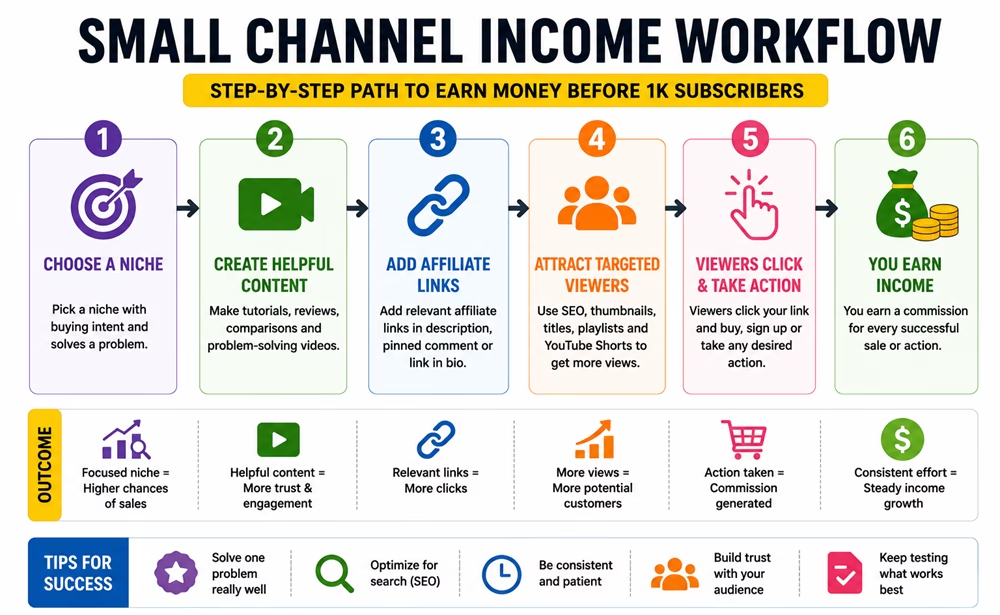
2. Pick a niche with buying intent
All channel niches are not equal in earning potential. Small channels monetize faster when the audience is already close to a purchase. Niches like software, creator tools, tech, education, productivity, business, and finance usually have stronger monetization potential than broad entertainment niches because viewers are looking for specific solutions.
Ask yourself: Are people searching for “best,” “review,” “how to use,” or “vs” in your niche? If yes, your niche probably has affiliate potential.
When you are thinking about which content to create, read this low-competition YouTube topics guide
3. Build videos around one clear offer
Do not try to promote everything at once. Pick one main product or service per video and make the content genuinely useful. A tutorial that teaches a problem and shows the tool that solves it usually converts better than a random mention in a long description.
Follow this simple video structure: Problem → Solution → Demo → Recommendation → Link
That keeps the video helpful instead of salesy.
4. Use your description and pinned comment properly
Join one of the profitable external affiliate programs and use your video descriptions and pinned comments to place affiliate links. Keep the link placement simple, clear, and relevant to the video. YouTube’s rules allow external links on channel surfaces as long as they do not violate the external-links policy, so the key is to keep your links clean and compliant.
You can use a strong call to action in your video like this:
“I’ve linked the exact tool I use in the description if you want to try it.”
5. Build an earnings ladder before YPP
Small channels can grow monetization in stages. The first stage is external income: affiliate links, services, or digital products. The second stage is expanded YPP access at 500 subscribers if your channel meets the other thresholds. The third stage is full ad monetization at 1,000 subscribers and the required watch-time or Shorts-view threshold.
Think of these like a series of earning opportunities for your channel instead of relying on a single income source.
Increasing earnings need to improve the click-through rate. Read this article on thumbnail CTR optimization
6. Focus on content that can convert
Some content types monetize faster than others. If your videos are purely educational or informational, your earning potential is usually low. These types of content usually perform well for small channels:
- tutorials
- product reviews
- comparisons
- tool roundups
- setup guides
- problem-solving videos
These formats work because they attract viewers who already want to buy or choose something.
Ask yourself which of the following topics will convert more:
- How to create an image using AI
- 10 best free AI tools that generate professional-quality images
7. If you qualify, add YouTube’s own Shopping affiliate tools later
YouTube’s Shopping affiliate program is designed to let eligible creators tag products directly in content and earn commissions when viewers buy on the retailer’s site. YouTube says this program is available to eligible creators in countries including the USA, UK, India, etc. But the creator must already be in YPP and meet the subscriber threshold for YPP.
So the practical answer is, if you are a small beginning channel, you can begin with external affiliate programs now, and later add YouTube’s own affiliate tools if your channel becomes eligible.
8. Keep the channel growth-focused
The faster your channel grows, the faster your monetization options expand. Focus on the following improvement areas while creating your videos:
- thumbnail click-through rate
- watch time and retention
- niche clarity
- consistency
- topic selection
Remember, a small channel that gets strong traffic on a focused topic can earn earlier than a larger channel with random content.
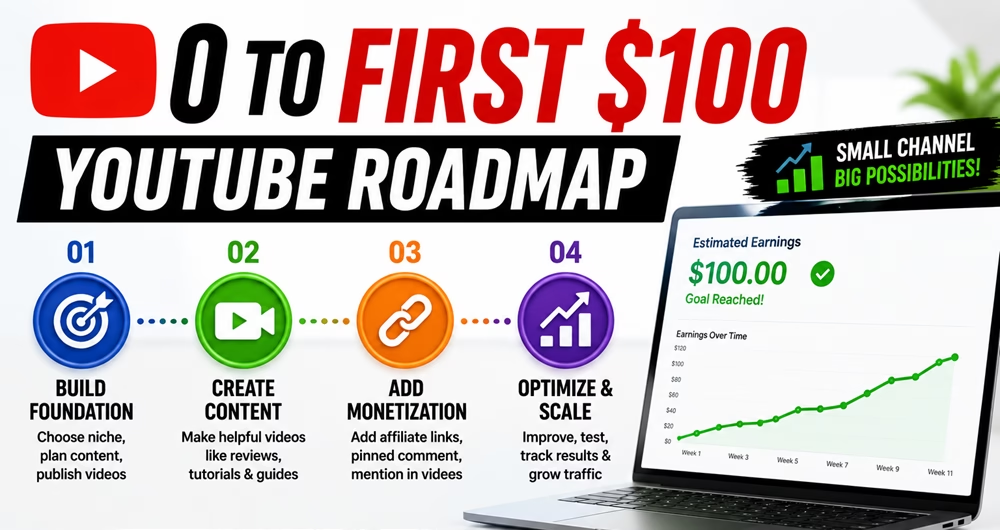
0 to First $100 YouTube Roadmap
Getting your first $100 on YouTube usually needs your consistency and smart monetization techniques. Focus on solving the problems of your target viewers and connecting your content with a relevant offer.
| Stage | Timeline | Core Focus | Goal / Expected Result |
|---|---|---|---|
| 1. Foundation | Week 1–2 | Choose intent-driven niche & 1-2 affiliate products | Publish 3–5 videos |
| 2. Content | Week 3–6 | Tutorials, product reviews, comparisons | Reach 500–1,500 views |
| 3. Monetize | Week 6–8 | External affiliate links & pinned comment CTAs | Generate first affiliate clicks |
| 4. Optimize | Month 2–3 | Thumbnails, CTR tracking, title testing | 8k–15k views / $50–$100+ |
“The first $100 usually comes from solving one problem repeatedly—not from chasing viral videos.”
Final thoughts
Monetizing a small channel before 1K subscribers is not only possible, it is often the smartest way to start. Use external affiliate offers first, build a niche that attracts buyers, and treat YPP as one part of a bigger income system. Then, once you cross the thresholds, add YouTube’s own monetization tools on top.
That’s how small channels monetize.



Disclosure: We are partners or associates of Amazon and other top brands. We may earn a small amount from qualifying purchases without increasing the price. Please read our full affiliate disclosure here.

