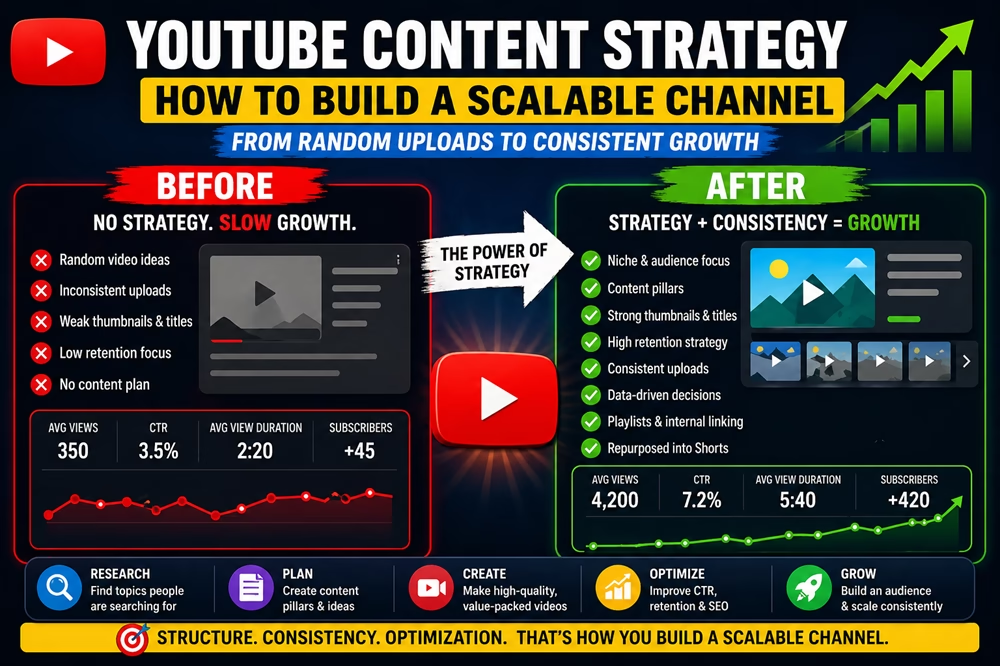
A scalable YouTube channel is not built video by video. It is built on a system.
Many creators focus only on uploading more content, but growth comes from something deeper: a repeatable strategy that helps you create, optimize, and improve every upload. If your channel has no system, every video becomes a new struggle. If your channel has a strategy, each video becomes part of a bigger machine.
This guide will show you how to build a YouTube content strategy that can grow with you over time, even if you are starting small.
Why scalability matters
A scalable channel is one that can keep growing without needing you to reinvent your process every time.
That means:
- your ideas come from a repeatable research system
- your videos follow a consistent structure
- your thumbnails and titles follow a pattern
- your content can be repurposed into Shorts, playlists, and future videos
- your channel becomes easier to manage as it grows
The goal is not just to make one good video. The goal is to build a channel that can produce good videos again and again.
Learn the fundamentals in this YouTube growth guide.
Table of Contents
Steps for YouTube Content Strategy
Step #1: Choose a clear content direction
A scalable channel starts with a focused direction. If your channel covers everything, it becomes hard to build momentum. If it focuses on one audience and one main promise, it becomes much easier to grow.
Ask yourself about your YouTube channel:
- Who is this channel for?
- What problem does it solve?
- What kind of content can I make consistently?
- What topics fit naturally inside this niche?
Focus on the direction that answers the above questions. For example, you can go in a scalable direction if you focus on a topic like:
- budget tech reviews
- spoken English practice
- content creation tools and workflows
A focused channel does not mean a boring channel. It means a channel with a strong identity.
Step #2: Build content around content pillars
Instead of posting random videos, create 3 to 5 core content pillars. These are the main categories your channel will keep returning to.
For example, a channel that focuses on YouTube growth might use content on:
- YouTube SEO
- thumbnail strategy
- watch time and retention
- subscriber growth
- content planning
These content pillars help you:
- stay consistent
- build topical authority
- generate more ideas faster
- create video clusters
- make your channel easier to understand
If every video fits into a pillar, your channel looks more structured and more trustworthy.
Build your content pillars using smart research from this guide to low-competition YouTube topics.
Step #3: Create a repeatable idea system
One of the biggest problems creators face is not editing or filming. It is idea fatigue. A scalable content strategy needs a way to generate topics repeatedly.
Your system can include:
- YouTube search suggestions
- competitor video analysis
- audience comments
- Google Trends
- keyword tools
- frequently asked questions
- content gaps in your niche
You can do these processes:
- Find a core topic
- Break it into smaller questions
- Turn those questions into video ideas
- Group similar ideas into a series
For example, if the main topic is YouTube SEO, you can include smaller ideas like:
- how to rank videos on page 1
- how to find low-competition topics
- how to write better descriptions
- how to improve CTR
- how to increase retention
This gives you a long-term pipeline of content without constantly starting from zero.
Step #4: Use a consistent video format
Scalable channels use structure. When your videos follow a consistent format, they are easier to create and easier for viewers to understand.
A simple video formula should include:
- Hook
- Problem
- Solution
- Example
- Summary
- CTA
That format works for many niches because it is clear and repeatable. Try to include these elements in every video.
When viewers know what to expect, they stay longer. When you know what to make, production becomes faster. That is how scalability starts.
You can also build repeatable content formats like:
- list videos
- tutorial videos
- case studies
- “mistakes to avoid” videos
- tool comparisons
- workflow breakdowns
If one format works, create more videos using the same structure.
Step #5: Plan for repurposing from the beginning
A scalable channel does not treat every video as a one-time asset. It turns one idea into multiple pieces of content.
For example, you can create more from one long-form video, like:
- 3 to 5 Shorts
- a blog post
- a Pinterest pin
- a community post
- a follow-up video for a future video
- an email newsletter topic
This matters because it multiplies your output without multiplying your workload.
So, before you publish a video, ask:
- Can this become a Short?
- Can this become a carousel or an infographic?
- Can this become a blog section?
- Can this become a follow-up video?
The more repurposable your content is, the more scalable your channel becomes.
Tip: Use the “Related Video” feature in YouTube Shorts to drive traffic back to your related long-form “Pillar” content.
Step #6: Optimize for search and suggested videos
A strong content strategy should support both YouTube search traffic and recommendation traffic.
To make your videos search-friendly:
- include keywords in the titles
- write clear descriptions, including the keyword
- target specific viewer intent
- use chapters
- speak the keyword naturally in the video
To increase recommendations on YouTube:
- stay within your niche
- create related topic clusters
- make videos with retention methods
- match your thumbnails with the titles
- publish follow-up content around winning topics
Search helps people find you. Suggested videos help people keep discovering you.
Optimize your videos for both results.
Learn how to rank your videos on YouTube with this SEO guide.
Step #7: Keep your production workflow simple
A scalable channel requires a workflow that doesn’t burn you out.
Create a simple workflow like this:
- Monday: research ideas
- Tuesday: script
- Wednesday: record
- Thursday: edit
- Friday: publish
- Saturday: create Shorts
- Sunday: review analytics
You do not need a complicated production system. You need one you can repeat every week.
To keep your workflow scalable:
- use a template
- batch similar tasks
- reuse title styles
- reuse thumbnail layouts
- save script structures
- keep your editing style consistent
The less friction in your workflow, the easier your YouTube channel is to grow.
📅 Weekly YouTube Content Calendar
Stay consistent and track your progress with this simple workflow. Create a calendar like this:
| Day | Content Type | Topic / Idea | Keyword | Status |
|---|---|---|---|---|
| Monday | Research | Find low-competition topics | YouTube SEO topics | 🔴 Pending |
| Tuesday | Script | Write video script | Watch time tips | 🟡 In Progress |
| Wednesday | Recording | Record video | Retention strategy | 🔴 Pending |
| Thursday | Editing | Edit & add visuals | Video optimization | 🟢 Completed |
| Friday | Publishing | Upload & optimize | YouTube SEO | 🔴 Pending |
| Saturday | Repurposing | Create Shorts & Pins | Shorts content | 🟡 In Progress |
| Sunday | Analytics | Review performance | CTR & retention | 🔴 Pending |
Step #8: Focus on retention and engagement
A channel cannot scale if viewers leave early. Retention tells YouTube that your content is worth promoting.
To improve retention, do these:
- start with a strong hook
- remove long intros
- deliver value early
- use visual changes
- avoid filler
- keep the pacing tight
- tease what is coming next
Engagement also matters. do these:
- reply to comments quickly
- ask viewers a question
- use community posts
- encourage meaningful interaction
A scalable strategy is not just about making content. It is about making content that people stay with.
How to improve it? Read this watch time & retention guide.
Step #9: Build series, not just single videos
A series helps you create momentum in your YouTube journey.
Instead of making isolated videos, build connected content sequences. For example, if your main topic is YouTube SEO, create a video series like this:
- YouTube SEO Basics
- YouTube SEO Tools
- YouTube SEO Mistakes
- YouTube SEO Case Study
- YouTube SEO Workflow
A series makes your channel feel more complete. It also increases the chance that a viewer watches more than one video in your channel.
That is important because session time helps your channel grow.
A scalable channel gives viewers a path, not just a single stop.
Step #10: Use analytics to decide what to scale
Not every video deserves a sequel. The best YouTube channels use data to decide what to repeat.
Use YouTube Analytics every week and look at:
- CTR
- watch time
- retention
- average view duration
- subscriber gain
- traffic source
- comments and saves
Ask yourself:
- Which videos bring in the best viewers?
- Which topics get the strongest retention?
- Which thumbnails get more clicks?
- Which formats convert subscribers?
Then double down on what works.
Scalability means making the right videos, not just more new videos.
Step #11: Keep your branding consistent
Consistency helps viewers recognize your channel quickly. If they were interested, they would quickly land on your video.
Your branding includes:
- thumbnail style
- color palette
- title format
- intro tone
- content structure
- visual identity
Your branding should not feel rigid, but it should feel familiar.
When viewers recognize your videos instantly, they are more likely to click. That makes your channel easier to scale.
Step #12: Build for long-term growth, not quick spikes
A scalable strategy is designed for compounding growth in the future. That means every video should help the next one perform better.
You can do this by:
- linking related videos in your channel
- creating playlists
- covering connected topics
- building topic clusters
- improving your skills over time
- revisiting and updating older videos
Think in terms of systems, not hits.
The best channels do not rely on one viral video. They build a library of videos that keep working together.
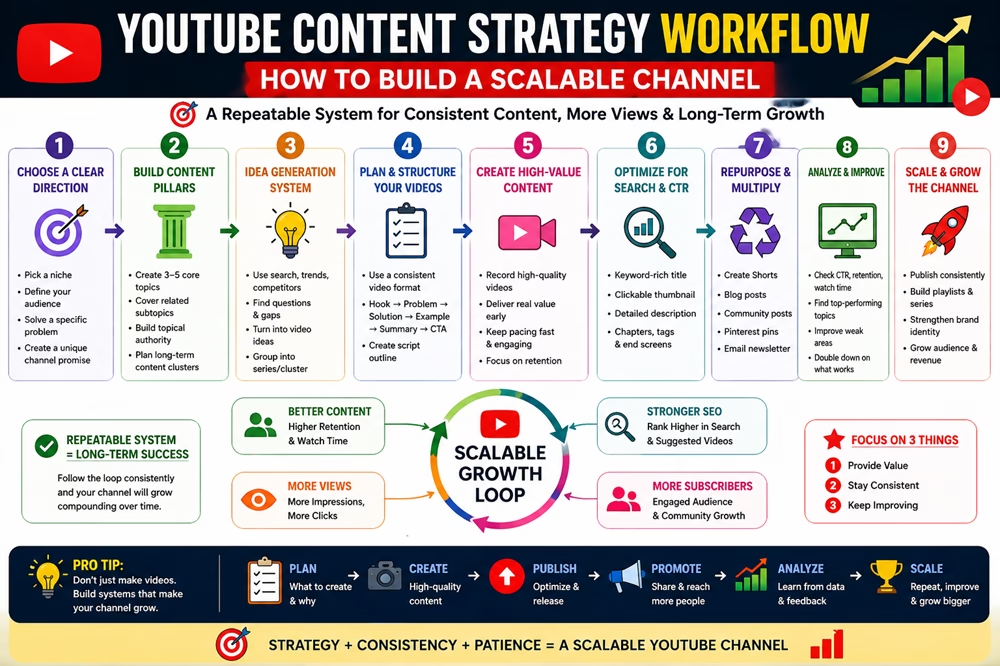
A simple scalable YouTube strategy you can repeat
Use this framework:
Niche + Pillars + Workflow + Repurposing + Analytics + Consistency
That is the backbone of a scalable channel.
If you want a channel that grows over time, do this:
- choose one clear niche
- build 3 to 5 content pillars
- make repeatable video formats
- repurpose every strong idea
- review analytics regularly
- keep publishing consistently
That is how a small channel becomes a scalable one.
Common mistakes that hurt scalability
Don’t do these if you want to scale your channel:
- changing niches too often
- making random content
- using no video structure
- ignoring retention
- overcomplicating production
- not repurposing content
- copying other channels without a system
- failing to study analytics
If your channel feels chaotic, growth becomes slow. If your channel feels organized, growth becomes much easier.
Case Study: Growth Strategy Transformation (Inspired by MrBeast)
You might have heard about the @MrBeast channel or watched some videos. I had an interest in analyzing how this channel grows.
🔴 Before (Early Phase)
- Random video ideas
- Inconsistent uploads
- Basic thumbnails & titles
- Low retention focus
📉 Result:
- Slow growth
- Fewer clicks
- Limited audience reach
🟢 After (Scalable Strategy)
Then, I found this channel implemented some strategies, including:
- Focused on high-retention content
- Strong thumbnail + title strategy (Using high-contrast faces and ‘the payoff’ in the frame to trigger curiosity)
- Clear content formats (challenge, storytelling)
- Heavy focus on viewer satisfaction
- Constant testing & optimization
📈 Result:
- Massive increase in views
- Viral growth
- Strong brand identity
- Consistent scaling
Key Takeaway
“The shift from random content to a repeatable, data-driven system is what turns the MrBeast channel into a scalable growth machine.”
How This Applies to You
Even if you’re a small creator, you can:
- Focus on one niche
- Improve CTR + retention
- Build repeatable formats
- Learn from analytics
It means you don’t need a big budget — you need a better system with the expert advice discussed on this page.
Final thoughts
A scalable YouTube channel is built on systems, not stress.
When your strategy is clear, your content becomes easier to create, easier to optimize, and easier to improve. Over time, that creates momentum.
Focus on a strong niche, repeatable content pillars, simple workflows, and data-driven decisions. That is how you build a channel that can grow without constantly starting over.
Frequently Asked Questions
What is a scalable YouTube channel?
A scalable YouTube channel is one that can keep growing through repeatable systems, clear content pillars, and a strong publishing workflow.
How many content pillars should a channel have?
Most channels work well with 3 to 5 core content pillars. That keeps the channel focused without limiting variety.
Why is repurposing important for YouTube growth?
Repurposing helps you get more value from each video by turning one idea into Shorts, blog posts, pins, and future content.
What makes a YouTube strategy scalable?
A scalable strategy is repeatable, focused, easy to manage, and backed by analytics.



Disclosure: We are partners or associates of Amazon and other top brands. We may earn a small amount from qualifying purchases without increasing the price. Please read our full affiliate disclosure here.

