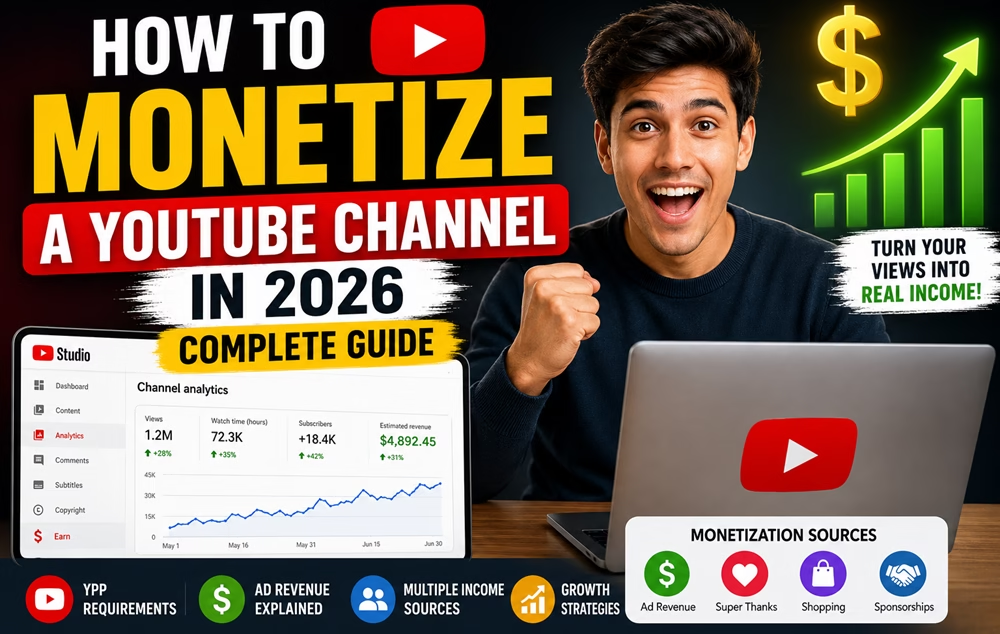
Monetization is a dream of every new YouTuber. However, monetizing a YouTube channel in 2026 is no longer just about reaching a subscriber milestone. It is about building a channel that qualifies for the YouTube Partner Program, follows monetization policies, and creates content that keeps people watching.
YouTube’s monetization system now includes earlier access to fan funding and select Shopping features through the expanded YPP, while full ads and YouTube Premium revenue sharing still require the standard YPP thresholds.
The good news is that you do not need to be a huge creator to start earning. You can build toward monetization in stages: first by creating content that earns attention, then by qualifying for the expanded program, and finally by unlocking ad revenue, Shorts revenue sharing, and additional income streams.
If you want to grow a new channel, read this article – Your blueprint to YouTube channel growth
Table of Contents
#1 Understand how YouTube monetization works
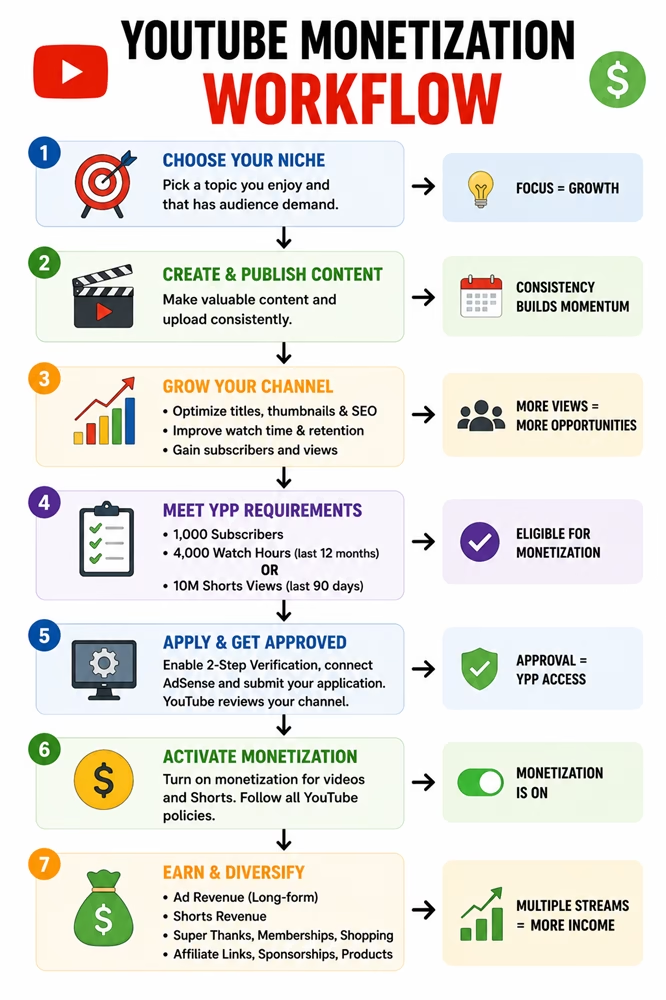
YouTube monetization is split into two main stages. The expanded YouTube Partner Program gives creators earlier access to fan funding and select Shopping features when they reach either 500 subscribers plus 3 valid public uploads in the last 90 days and 3,000 valid public watch hours in the last 12 months, or 500 subscribers plus 3 valid public uploads in the last 90 days and 3 million valid public Shorts views in the last 90 days. Full YPP access for ad revenue sharing requires 1,000 subscribers plus either 4,000 valid public watch hours in the last 12 months or 10 million valid public Shorts views in the last 90 days.
One important detail: watch hours earned from Shorts views in the Shorts Feed do not count toward the 4,000 watch-hour threshold for full YPP access. YouTube also reviews channels before accepting them and continues checking that members still meet monetization policies over time.
#2 Choose the monetization path that fits your channel
If your channel is long-form focused, your main goal is usually 4,000 valid public watch hours and 1,000 subscribers. If your channel is Shorts-driven, the Shorts path may be a better fit, because 10 million valid public Shorts views in 90 days can qualify you for full YPP access.
If you are still early, the expanded YPP can help you reach monetization-adjacent features sooner with 500 subscribers, 3 public uploads in 90 days, and either 3,000 watch hours in 12 months or 3 million Shorts views in 90 days. That makes it a useful first milestone before the full ad-revenue stage.
Use short-form content to grow faster with our YouTube Shorts strategy guide
#3 Build a channel that can actually qualify
Monetization is easier when your channel has a clear niche, a repeatable content style, and a consistent publishing plan. That is because YouTube reviews the channel as a whole, not just one video, and channels must follow YouTube monetization policies before they can join YPP.
A practical growth plan looks like this (what you should do):
- Pick one audience and one content promise.
- Publish videos consistently for at least 90 days.
- Focus on topics that can drive watch time or Shorts views.
- Improve titles, thumbnails, and retention.
- Track which videos move you toward the eligibility thresholds.
That approach gives your channel a real chance to qualify and monetize without relying on luck.
Learn how to build a scalable system in our YouTube content strategy
#4 Set up your channel the right way
Before you apply to YPP, make sure your channel has 2-Step Verification turned on, an active AdSense for YouTube account linked to the channel, and a channel based in an eligible country or region. YouTube lists these as required steps for the expanded YPP application process.
You should also keep your channel clean from policy problems. YouTube says creators must follow the channel monetization policies and can be reviewed again after joining YPP, so strong policy compliance matters as much as growth.
#5 Focus on the revenue streams YouTube actually offers
Once you are in YPP, the core monetization options include ad revenue and YouTube Premium revenue sharing. The expanded YPP adds earlier access to fan funding and select Shopping features. Shorts creators can also join the Shorts Monetization Module to earn from eligible Shorts views in the Shorts Feed, starting from the date they accept the module.
A smart monetization strategy usually combines YouTube income with other business models such as affiliate links, digital products, services, or sponsorships. Those extra income streams are not a substitute for YPP, but they can make a channel profitable much earlier and reduce reliance on ad revenue alone.
#6 What content monetizes best in 2026
The best monetizing content is usually content that viewers trust, watch longer, and come back for. That often means tutorials, how-to videos, reviews, explainers, comparisons, case studies, and Shorts that deliver one useful idea quickly. Because YouTube checks advertiser-friendliness and channel-wide policy compliance, the safest path is original, valuable content that matches viewer expectations.
If you want to grow faster toward monetization, focus on content that helps with one of these goals: watch time, Shorts views, or subscriber growth. That means choosing topics with clear intent, making strong thumbnails, and keeping the first 15 seconds sharp.
#7 A simple path to monetization
Here is a practical roadmap you can follow to monetize your channel:
Phase 1: Start strong
Build a focused niche, publish regularly, and make sure every video has a clear topic and thumbnail.
Phase 2: Reach the first threshold
Work toward 500 subscribers plus either 3,000 watch hours and 3 uploads in 90 days, or 3 million Shorts views in 90 days, so you can access the expanded YPP where eligible.
Phase 3: Unlock full monetization
Keep scaling until you reach 1,000 subscribers plus either 4,000 watch hours or 10 million Shorts views in 90 days. That is the main threshold for ad revenue sharing and YouTube Premium revenue sharing.
Phase 4: Add extra income streams
Use affiliate links, sponsorships, and products so your channel can earn beyond YouTube ads.
#8 Mistakes that slow down monetization
The fastest way to delay monetization is to upload random content without a clear theme. Another common mistake is relying too much on Shorts or too much on long-form without a strategy that matches the threshold you are chasing. For example, if your goal is the 4,000 watch-hour path, Shorts watch time does not count toward that requirement.
Other mistakes include weak titles, misleading thumbnails, low retention, and content that violates monetization policies. YouTube says channels must follow its monetization policies and remain eligible after review, so quality and compliance matter as much as volume.
#9 Best monetization strategy by channel stage
For a new channel, the best move is usually to build audience trust and topic clarity first. In the middle stage, you should optimize toward whichever threshold fits your format: watch hours for long-form or Shorts views for short-form. Once you are in YPP, focus on improving RPM, retention, and secondary monetization such as affiliates or products.
A simple rule works well:
Start with value, grow with consistency, and monetize with systems.
YouTube RPM Niche Comparison (2026)
RPM (Revenue Per Mille) is the estimated earnings a creator makes per 1,000 views after YouTube’s share. Different niches earn very different RPMs because advertisers pay more in some industries than others.
| Niche | Estimated RPM Range |
|---|---|
| Finance & Investing | $15–$40+ |
| Business & Marketing | $10–$30 |
| Software & AI Tools | $8–$25 |
| Education & Tutorials | $5–$15 |
| Tech Reviews | $4–$12 |
| Productivity & Self-Improvement | $3–$10 |
| Gaming | $1–$5 |
| Entertainment & Memes | $0.5–$4 |
| Viral Shorts / General Clips | $0.1–$2 |
Why Some Niches Pay More
Higher RPM niches usually attract:
- businesses with bigger ad budgets
- audiences likely to buy products/services
- high-value keywords
For example:
- Finance advertisers may pay much more per click than entertainment brands
- Software companies often pay high commissions through affiliate programs
Important Insight
A smaller high-RPM channel can sometimes earn more than a larger low-RPM channel.
Example:
- 100K finance views → may earn more than
- 1M meme/video clip views
👉 That’s why niche selection matters so much for monetization.
“Views grow channels, but RPM determines earning potential.”
YouTube Monetization Earnings Examples
Example 1: Beginner Channel
Niche: YouTube tips
Monthly Views: ~20,000
Income Sources: Ads + affiliate links
⇒ Estimated Earnings: $50–$200/month
Example 2: Growing Shorts Channel
Niche: Motivation/facts
Monthly Shorts Views: ~1M
Income Sources: Shorts revenue + sponsorships
⇒ Estimated Earnings: $200–$1,000/month
Example 3: Tech Tutorial Channel
Niche: Software & AI tools
Monthly Views: ~150,000
Income Sources: Ads + affiliates
⇒ Estimated Earnings: $1,500–$5,000/month
💡 Tech niches often have higher RPMs.
“Many creators earn more from affiliates, sponsors, and products than from YouTube ads themselves.”
Before vs After Monetization Case Study
🔴 Before Monetization Strategy
A small creator uploaded random videos without a clear niche or monetization plan.
📉 Results (August to November 2025)
- Subscribers: 320
- Monthly views: ~8,000
- Watch time: low retention
- Earnings: $0
⚠️ Problems
- No consistent topic
- Weak thumbnails
- No affiliate links
- Inconsistent uploads
- Poor audience targeting
👉 Result: Slow growth and no monetization progress.
🟢 After Monetization Strategy
The creator focused on:
- one niche (Tech reviews)
- searchable topics
- better thumbnails
- longer watch time
- affiliate tools in descriptions
- consistent weekly uploads
📈 Results (December 2025 to April 2026)
- Subscribers: 3,500+
- Monthly views: ~120,000
- Watch time: significantly improved
- Ad revenue: ~$600/month
- Affiliate income: ~$900/month
👉 Total Estimated Earnings: ~$1,500/month
Biggest Improvement
The biggest change was moving from:
❌ random uploads
to
✔ strategic, monetizable content
“Channels usually monetize faster when they combine strong content strategy with multiple income streams—not ads alone.”
YouTube Monetization Checklist 2026
Eligibility Milestones
- Reach 500 Subscribers: Unlocks early access to fan funding and Shopping features.
- Reach 1,000 Subscribers: Required for full ad revenue sharing.
- Fan Funding Threshold: Achieve 3,000 Watch Hours (last 12 months) OR 3M Shorts Views (last 90 days).
- Ad Revenue Threshold: Achieve 4,000 Watch Hours (last 12 months) OR 10M Shorts Views (last 90 days).
Technical Setup
- Enable 2-Step Verification: Ensure your Google Account is secure to protect your earnings.
- Link AdSense for YouTube: Set up and link an active account to receive payments.
- Location Eligibility: Ensure your channel is based in a country where the YouTube Partner Program is available.
Policy & Compliance
- Zero Active Strikes: Ensure your channel has no active Community Guideline strikes.
- Monetization Policy Review: Audit your content to ensure it follows YouTube’s monetization policies (originality and advertiser-friendliness).
Final thoughts
In 2026, YouTube monetization is very achievable, but it rewards creators who build with intention. The platform gives earlier access to some monetization features through the expanded YPP, and full ad monetization still comes from meeting the standard subscriber and view thresholds. If you follow the policies, stay consistent, and build a channel around real viewer value, monetization becomes a process instead of a mystery.
The creators who win are not the ones chasing shortcuts. They are the ones building a channel that people want to watch, return to, and support.

Disclosure: We are partners or associates of Amazon and other top brands. We may earn a small amount from qualifying purchases without increasing the price. Please read our full affiliate disclosure here.

