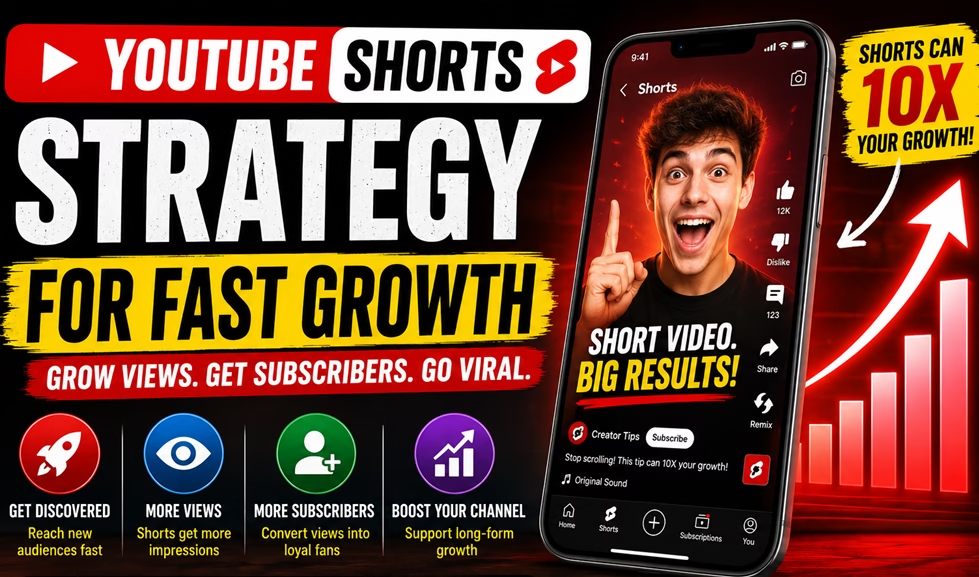
YouTube Shorts can be one of the fastest ways to grow a channel in 2026. They help new creators get discovered, test ideas quickly, and bring fresh viewers into a channel without needing a massive upload library.
But Shorts only work well when you use them with a strategy. Random clips, weak hooks, and unclear topics usually lead to low retention and few subscribers. If you want fast growth, you need a repeatable Shorts system.
This guide shows you how to use YouTube Shorts for discovery, engagement, and subscriber growth. It is based on what worked for me. Follow this guide, and then you can move to advanced strategies after you have new experiences.
Table of Contents
Why Shorts matter for channel growth
Shorts give small channels a chance to reach a wider audience quickly. A well-made Short can get thousands or even millions of views because YouTube actively recommends short-form content to new viewers.
Shorts are useful because they can:
- get attention fast
- test topics quickly
- drive new subscribers
- build brand visibility
- support long-form videos
- help you grow without relying only on search
If your channel is new, Shorts can help you get traction before your long-form content starts ranking strongly. You should include the Shorts strategy if you want to grow your channel easily and quickly.
Step #1: Choose the right Shorts topic
As you begin your strategy, you must research the best Shorts topics in your niche. They should be simple, specific, and easy to understand in a few seconds. A Short should focus on a single idea.
Good Shorts topics can be:
- one quick tip
- one mistake to avoid
- one tool recommendation
- one before/after result
- one useful fact
- one short tutorial
- one opinion or insight
For example, if you focus on AI tools, you can create Shorts on:
- 3 best AI video generators for YouTube
- Best free AI tool for image generation
- How to generate video scripts with ChatGPT
If the topic is too broad, the Short will feel unfocused. Keep it narrow.
Learn a guide for finding low-competition YouTube topics
Step #2: Hook viewers in the first 2 seconds
The beginning of a Short is everything. If people do not stop scrolling immediately, the video loses.
A strong hook should:
- create curiosity
- show a benefit
- make a bold statement
- present a problem
- promise a result
Examples of strong hooks:
- “This one mistake is killing your YouTube views.”
- “Use this if your Shorts are not getting views.”
The hook should be short and direct. Do not waste the first few seconds.
Step #3: Keep the video focused on one message
A Short is not the place to explain everything—the more focused the message, the better the retention.
To stop scrolling and keep retention, use this simple structure:
- Hook
- Main point
- Quick example
- Close with a CTA
This makes the Short easy to follow and easy to remember.
For example (if you create a Short on YouTube Shorts strategy):
- Hook: “This is why your Shorts are not growing.”
- Main point: “You are starting too slowly.”
- Example: “Show the result first, then explain it.”
- CTA: “Follow for more YouTube growth tips.”
That is enough for one Short.
Step #4: Use captions and on-screen text
Use captions, if possible, to keep attention and make the message easier to understand.
Use:
- large text
- short phrases
- highlighted keywords
- simple movement
- strong contrast
Your text should support the message, not crowd the screen. Keep it readable on mobile.
Step #5: Match the title with the Short
Your title still matters, even on Shorts. It helps YouTube understand the content and also helps viewers decide whether to watch.
Good title formula:
Keyword + benefit + curiosity
For example: “How to Get More Facebook Followers”
The title should match the actual content. If the title feels misleading, viewers will leave quickly.
Learn how to rank your Shorts with our YouTube SEO guide
Step #6: Use Shorts to support your long-form content
Shorts should not live alone. They work even better when they push viewers toward your longer videos.
You can use Shorts to:
- tease a longer tutorial
- summarize a bigger topic
- answer one question from a long video
- share one key tip
- bring attention to a playlist
For example, if your long video is about YouTube SEO, you can make Shorts about:
- keyword research
- CTR
- retention
- titles
- thumbnails
This creates a content cluster and strengthens your channel.
Step #7: Post consistently
Shorts growth improves when you publish consistently. You do not need to post too much, but you do need a steady rhythm.
Follow this method:
- 3 to 5 Shorts per week
- 1 long-form video per week
- regular comment replies
- weekly performance review
Consistency helps YouTube understand your channel and helps your audience know what to expect.
Step #8: Focus on retention, not just views
A Short can get views and still fail if people swipe away too quickly. Retention is what tells YouTube your content is worth showing again. Think about how to improve it.
To improve retention:
- start with the best part first
- cut unnecessary words
- keep pacing fast
- avoid long pauses
- use visual changes
- end before the content feels repetitive
The goal is to make people stay until the end and watch more of your content later.
Read our guide to learn more about watch time & retention
Step #9: Use Shorts as a testing tool
One of the best things about Shorts is that they can help you test ideas quickly. You can see what kind of topics, hooks, and formats your audience responds to.
Use Shorts to test:
- topic ideas
- titles
- thumbnail style
- on-screen text style
- voiceover style
- content angles
If a Short performs well, you can turn it into:
- a long-form video
- a blog post
- a new series
- a follow-up Short
Shorts can help you discover what your audience wants before you spend more time on long-form production.
Step #10: Add a clear call to action
A Short should end with a simple CTA. Do not make the CTA too long or too complicated.
Good CTA examples:
- Follow for more YouTube tips
- Watch the full video
- Comment “SEO” for part 2
- Subscribe for more growth strategies
- Check the full guide on my channel
The CTA should feel natural and relevant to the content.
Shorts strategy that works for fast growth
Use this strategy: Hook + one tip + visual proof + CTA
This format works because it is fast, clear, and easy to repeat.
Example:
- Hook: First, introduce a problem.
- Tip: Show the result in 1 or 2 seconds.
- Visual proof: Show a proof
- CTA: “Follow for more [your topic] tips.”
Start using this repeatable format. Your skill will grow after some Shorts.
Common mistakes with YouTube Shorts
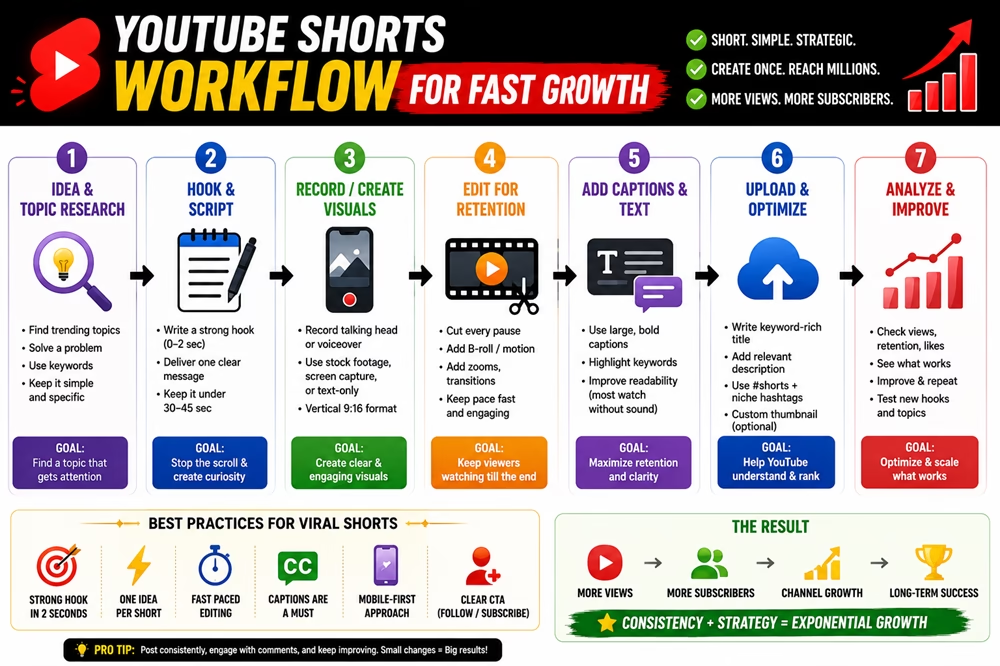
Many creators post Shorts, but not many use them well. Avoid these mistakes:
- long, slow intros
- too many ideas in one video
- weak captions
- unclear topic
- low-quality visuals
- no CTA
- random posting
- ignoring analytics to improve
These mistakes reduce retention and hurt your channel growth.
A Viral YouTube Shorts Example (Fast Growth Style)
“The Mistake” Hook
📝 Script
Hook (0–2s):
“THIS is why you can’t stop smoking.”
Main Tip (3–10s):
“The 5-second rule to crush cravings instantly.”
Example (10–18s):
❌ “Today I’ll explain… ( explain it from your knowledge/experience)”
✅ “This trick helped 900 people to stop smoking!”
CTA (18–22s):
“Follow for more stop-smoking tips.”
👉 Why it works:
- Curiosity hook
- Fast pacing
- Relatable problem
When is the best time to post YouTube Shorts in 2026?
Posting time does not guarantee virality, but it can help your Shorts get early engagement faster. The best strategy is to post when your target audience is most active.
For most creators, the best posting times are usually:
| Day | Best Time (Local Time) |
|---|---|
| Monday | 12 PM – 3 PM |
| Tuesday | 2 PM – 5 PM |
| Wednesday | 12 PM – 4 PM |
| Thursday | 3 PM – 6 PM |
| Friday | 12 PM – 5 PM |
| Saturday | 10 AM – 1 PM |
| Sunday | 9 AM – 12 PM |
👉 These are general starting points. Your audience may behave differently depending on your niche and location.
Why Posting Time Matters
When a Short gets quick engagement early:
- more people watch
- retention signals improve
- YouTube tests it with larger audiences
That early momentum can help the Short spread faster.
How to Find YOUR Best Posting Time
The best data comes from your own analytics.
Go to: YouTube Studio → Analytics → Audience
Look for:
- “When your viewers are on YouTube”
- Peak activity times
- Returning viewers
Pro tip: Post 1–2 hours before peak audience activity.
Test uploading at different times. See which hour gets more audience and engagement.
Before vs After Analytics (YouTube Shorts Strategy)
🔴 Before Using a Shorts Strategy
Before I had any YouTube experience, I uploaded random Shorts without hooks, captions, or clear topics. After 30 days, I got the following figures:
Analytics (30 Days)
| Metric | Result |
|---|---|
| Shorts Uploaded | 18 |
| Average Views | 200–500 |
| Average Retention | 32% |
| Subscribers Gained | +18 |
| Likes per Short | 5–15 |
| Traffic Source | Mostly Shorts feed |
| Returning Viewers | Very low |
⚠️ Problems I came to know
- Weak first 2 seconds
- No consistent niche
- Slow pacing
- No captions
- Random posting schedule
- No CTA
This result is low retention and weak subscriber growth.
🟢 After Implementing a Shorts Strategy
Then I focused on:
- strong hooks
- one-topic Shorts
- faster editing
- captions
- consistent posting
- Shorts connected to long-form content
Analytics (Next 30 Days)
| Metric | Result |
|---|---|
| Shorts Uploaded | 18 |
| Average Views | 8K–45K |
| Average Retention | 68% |
| Subscribers Gained | +620 |
| Likes per Short | 300–2,000 |
| Traffic Source | Shorts feed + browse |
| Returning Viewers | Increased significantly |
“Many creators see massive growth when they focus on retention and consistency instead of simply uploading more Shorts.”
How to know if your Shorts strategy is working
Check your analytics regularly. Look at:
- views
- retention
- average view duration
- likes and comments
- subscribers gained
- traffic source
A good Short strategy does not just bring views. It brings the right viewers and converts them into subscribers.
If viewers are watching longer and subscribing, your strategy is working.
✅ The Ultimate YouTube Shorts Checklist (2026)
Phase 1: Planning & Strategy
[ ] Choose One Specific Topic: Is the video focused on just one tip, mistake, or fact?
[ ] Identify the Goal: Is this Short meant to drive subscribers, test a new idea, or promote a long-form video?
[ ] Check the Niche: Does this topic align with your overall channel theme?
Phase 2: Production & Editing
[ ] The 2-Second Hook: Does the video start immediately with a curiosity gap or a bold statement?
[ ] Visual Captions: Are there large, high-contrast captions for mobile viewers?
[ ] Fast Pacing: Have you removed all “dead air,” long pauses, or slow intros?
[ ] Visual Proof: Do you show the result or evidence early in the video?
Phase 3: Optimization
[ ] Keyword-Rich Title: Does the title include a keyword + a benefit (e.g., “How to Get More Facebook Followers” )?
[ ] Vertical Format: Is the aspect ratio 9:16 and under 60 seconds?
[ ] Clear CTA: Does the video end with a specific instruction (e.g., “Follow for Part 2” )?
Phase 4: Distribution
[ ] Timing: Is the post scheduled for 1–2 hours before your audience’s peak activity?
[ ] Consistency Check: Are you on track to hit your 3–5 Shorts per week goal?
[ ] Engagement: Have you prepared to reply to the first few comments to boost momentum?
Final thoughts
YouTube Shorts can grow your channel fast, but only when you use them with a clear strategy. Focus on simple ideas, strong hooks, fast pacing, and a clear call to action.
Shorts are not just small videos. They are a discovery engine.
If you build a repeatable Shorts system, you can grow faster, test content faster, and bring more viewers into your channel. Try watching other Shorts in your niche and see why they get more views and subscribers.
Frequently Asked Questions
How often should I post YouTube Shorts?
A consistent schedule of 3 to 5 Shorts per week is a strong starting point for most creators.
How long should a YouTube Short be?
Keep it short, focused, and easy to follow. Many successful Shorts are under 30 seconds, but the best length depends on the topic and pacing.
Do Shorts help grow long-form videos?
Yes. Shorts can drive attention to your channel and help viewers discover your longer videos.
What is the best Shorts strategy for beginners?
Start with simple topics, strong hooks, and one clear message per video.
Are you looking to make money with YouTube Shorts? Check out the Udemy course shown below.


Disclosure: We are partners or associates of Amazon and other top brands. We may earn a small amount from qualifying purchases without increasing the price. Please read our full affiliate disclosure here.

