
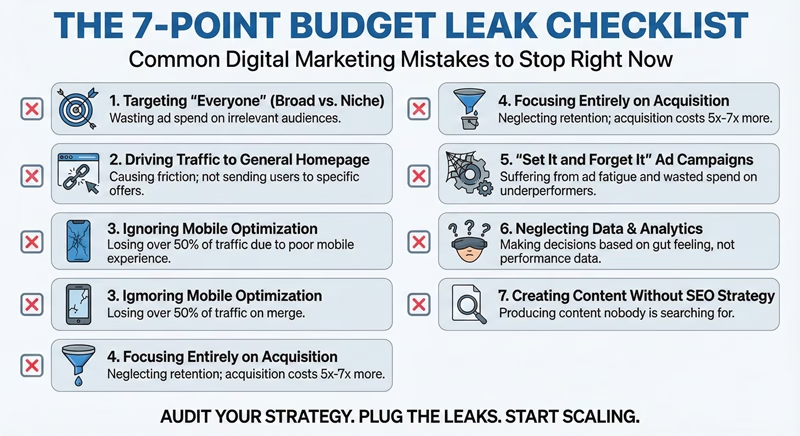
Mistake #1: Targeting “Everyone” (The Spray and Pray Method)
There is an old saying in the industry: “If you try to speak to everyone, you end up speaking to no one.”
One of the fastest ways to burn through a marketing budget is the “Spray and Pray” approach. This happens when businesses cast a massive net, hoping to catch any customer, rather than targeting the right customer. You might feel that narrowing your audience limits your potential sales, but the math tells a different story.
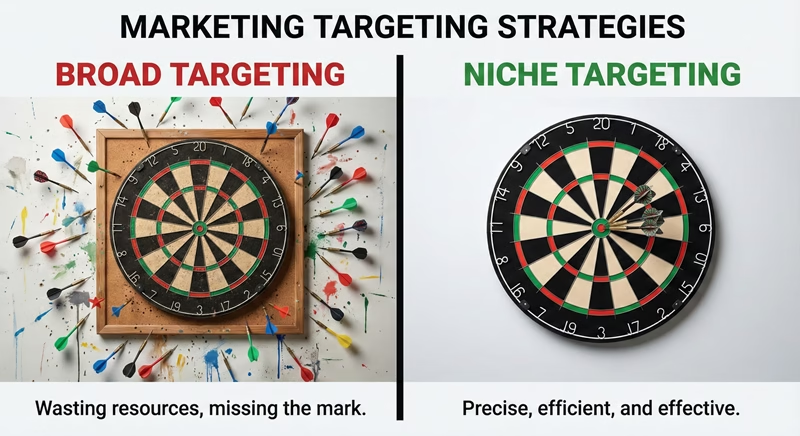
Why It Drains Your Budget: Digital advertising platforms like Google and Meta charge you for visibility. Remember these:
- In PPC (Pay-Per-Click), every time an unqualified user clicks your ad, you lose money.
- In Social Advertising, showing ads to people who have zero interest in your product lowers your “Relevance Score,” causing the platforms to charge you more per impression.
If you are selling high-end enterprise software, showing your ad to a teenager looking for free apps is a waste of resources.

How to Fix It:
- Define Your Buyer Personas: Don’t just target “Women, ages 25-45.” Go deeper. Based on your business, target “Women, ages 25-45, who live in urban areas, follow fitness influencers, and have purchased yoga gear in the last 30 days.” This will help reach the right people you need.
- Use Negative Keywords (For Search Ads): If you sell premium consulting, you must exclude keywords like “free,” “cheap,” “entry-level,” or “DIY.” This ensures your ads never show up for bargain hunters.
- Segment Your Messaging: If you serve two different industries, create two different ad sets. Do not use generic ad copy to try and appeal to both simultaneously.
Mistake #2: Driving Traffic to a General Home Page
Imagine walking into a massive department store and asking an employee, “Where are the red running shoes?” Now, imagine that employee drops you off at the front entrance of the store and says, “They’re in here somewhere. Good luck.”
You would probably leave, right?
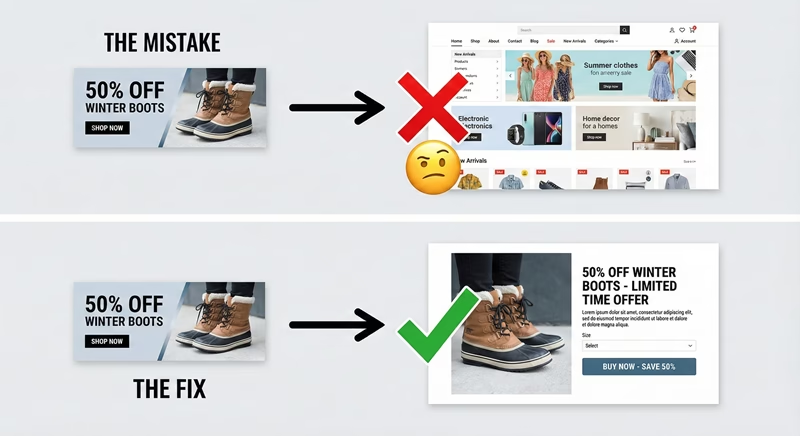
This is exactly what happens when you run a specific advertisement—promoting a particular product, service, or discount—and link it directly to your website’s generic homepage (e.g., www.yoursite.com).
Why It Drains Your Budget: Homepages are designed for exploration; they are full of navigation menus, “About Us” links, and competing offers. When a user clicks an ad, they have a specific intent. If they land on a homepage and have to hunt for the offer they just clicked on, friction occurs.
In the digital world, attention spans are measured in milliseconds. If the user doesn’t see what they expect immediately, they bounce. You paid for that click, but because the path to purchase wasn’t clear, you lost the potential ROI instantly.
How to Fix It:
Use Dedicated Landing Pages: Every distinct ad campaign needs a distinct destination. If your ad sells “Winter Boots,” the link must go specifically to the “Winter Boots” category or product page—not the “New Arrivals” page.
Match the “Ad Scent”: Ensure the headline, imagery, and offer on the landing page match the ad exactly. If the ad says “50% Off,” the landing page must immediately confirm “50% Off.”
Remove Distractions: Effective landing pages often remove the main navigation bar. This keeps the user focused on one goal: converting (buying the product, signing up, or downloading the ebook).
Mistake #3: Ignoring Mobile Optimization
We live in a mobile-first world. In many industries, over 60% to 70% of all web traffic comes from smartphones. Despite this, many businesses still design their marketing campaigns and websites on large desktop monitors, forgetting to check how the experience translates to a six-inch screen.
Why It Drains Your Budget: If you are running ads on platforms like Instagram, TikTok, or Facebook, nearly 100% of that traffic is on mobile.
When someone clicks your ad and lands on a site where:
- The text is too small to read without pinching and zooming.
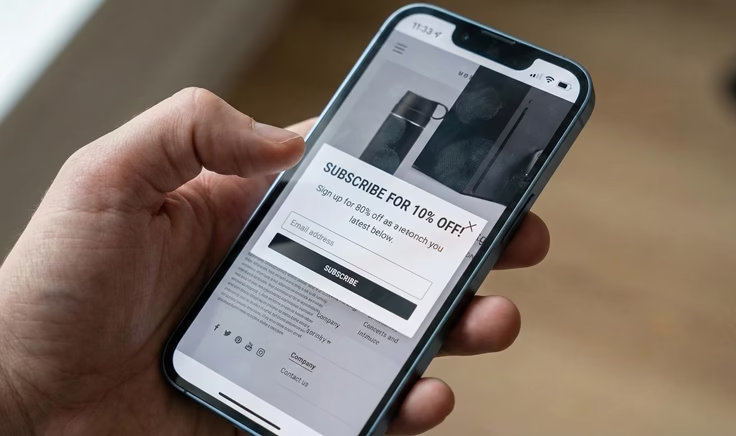
- A giant pop-up blocks the screen, and the “X” button is off the edge.
- The page takes more than 3 seconds to load on a 4G connection.
They will leave immediately. You are effectively paying premium rates to drive traffic to a broken storefront. Furthermore, search engines like Google use “mobile-first indexing,” meaning a poor mobile site can also tank your organic search rankings, compounding the loss.
How to Fix It:
Adopt Responsive Design: Ensure your website layout automatically adjusts to fit any screen size, from an iPhone Mini to an iPad Pro.
Prioritize Page Speed: Mobile users are often on cellular data, which can be slower than Wi-Fi. Compress your images and use tools like Google’s PageSpeed Insights to identify slowdowns.
The “Thumb Test”: Test your site on an actual phone. Are the buttons large enough to be tapped with a thumb? Are forms easy to fill out without endless scrolling? If not, redesign the interface for “thumb-friendly” navigation.
Mistake #4: Focusing Entirely on Acquisition (and Ignoring Retention)
Many marketers operate with a “hunter” mindset: they are constantly seeking the next kill, the next lead, the next new customer. While growth requires new business, relying solely on acquisition is a dangerous financial strategy. It’s like pouring water into a bucket full of holes—you have to keep the tap running at full blast just to maintain the same water level.
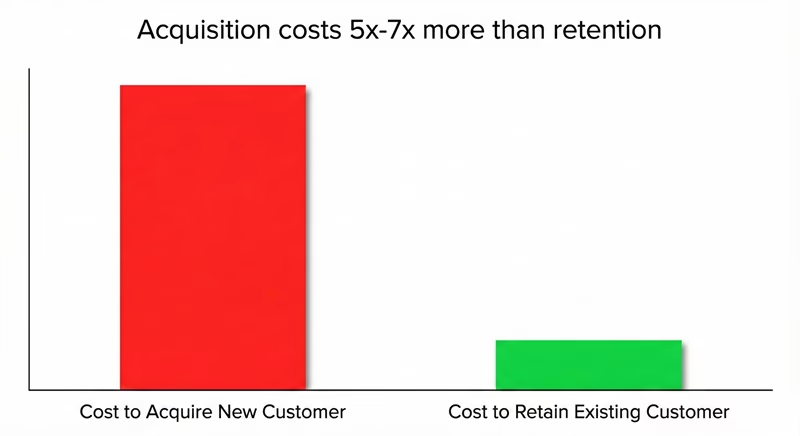
Why It Drains Your Budget: Customer Acquisition Cost (CAC) is almost always higher than retention costs. Industry data consistently shows that it costs 5 to 7 times more to acquire a new customer than it does to retain an existing one.
If you spend $50 to get a customer who buys once and leaves, your margin is thin. But if that same customer comes back three more times without you needing to spend another dime on ads, your profitability skyrockets. Ignoring your existing customer base means you are constantly paying the highest possible price for every single sale.
How to Fix It:
Leverage Email Marketing: Do not let your past customers forget you. Create automated email sequences that offer value, educational content, or exclusive “VIP” discounts to encourage repeat purchases.
Retarget for LTV (Lifetime Value): Use your ad budget to target people who have already bought from you. Show them accessories that complement their purchase or introduce them to a new product line.
Launch a Loyalty Program: Incentivize return visits. Simple point systems or referral bonuses turn your customers into advocates who bring in new business for free.
Mistake #6: Neglecting Data and Analytics
In the “Mad Men” era of advertising, marketing was largely an art form based on intuition. Today, it is a science based on data. Yet, many businesses still make critical budget decisions based on “gut feelings” or vanity metrics (like “likes” and “views”) rather than hard performance data.

Why It Drains Your Budget: If you don’t know exactly which dollar is bringing a return, you are flying blind.
You might cut a high-performing strategy because it feels expensive, not realizing it has the highest customer lifetime value.
You might double down on a campaign that brings in cheap clicks but zero actual paying customers.
Without proper attribution, you cannot optimize. You are essentially paying for a billboard in the dark—you have no idea who is seeing it or if it’s driving any traffic to your store.
How to Fix It:
Proper Setup is Non-Negotiable: Ensure Google Analytics 4 (GA4) is installed and actually tracking meaningful events. Merely having the code on your site isn’t enough; you need to configure it to track specific goals.
Implement Conversion Tracking: Install tracking pixels (like the Meta Pixel or LinkedIn Insight Tag) on your website. This allows the ad platforms to “learn” who is buying and optimize the ads for you.
Focus on Actionable Metrics: Stop obsessing over “Page Views” or “Follower Count.” Shift your focus to financial metrics: CPA (Cost Per Acquisition) and ROAS (Return on Ad Spend). These numbers tell the true story of your budget’s health.
Disclosure: We are partners or associates of Amazon and other top brands. We may earn a small amount from qualifying purchases without increasing the price. Please read our full affiliate disclosure here.

