Growing a YouTube channel as a small creator in 2026 is absolutely possible — but random uploads won’t work anymore.
Today, success requires:
- A clear niche
- Smart use of Shorts
- Retention-focused videos
- Data-driven optimization
- A monetization roadmap
This YouTube channel growth blueprint will walk you step-by-step through building a small channel into a scalable system, whether you are in the USA, India, or anywhere else.
Why YouTube Is Still the Best Platform in 2026?
Despite competition from short-form platforms, YouTube remains the most powerful creator platform because:
- Videos rank in Google search
- Content generates traffic for years
- Monetization options are diverse
- Shorts + long-form work together
Unlike social platforms, where content dies quickly, YouTube videos can grow long after publishing.
Table of Contents
YouTube Channel Growth Blueprint for 2026
Step 1: Choose a Micro-Niche (Small Creators’ Advantage)
Choose a niche, but make it a micro-niche. Small creators grow faster when they narrow down.
Instead of:
“Fitness”
Choose:
“Home workouts for busy professionals”
Instead of:
“Tech”
Choose:
“Budget smartphone reviews under $300”
Why Micro-Niches Work:
Because you target a more precise audience. So, you enjoy:
- Faster algorithm clarity
- Higher audience trust
- Better monetization potential
- Easier content planning
Your goal: Pick a niche where you can create 100+ videos as mentioned in our previous article.
You can find a good micro-niche in 5 steps:
- List some passions/skills you can create content.
- Check keyword demand via YouTube autocomplete/Google Trends or any dedicated YouTube keyword tool.
- Analyze top videos: look for low subs, steady views.
- Is the niche fit for monetization?
- Test with 5-10 Shorts.
Step 2: Build a Smart Content Structure
In 2026, successful small channels use a Shorts + Long-Form Model. Create both YouTube Shorts and long-form videos.
1️⃣ Shorts (Discovery Engine)
Purpose:
- Fast exposure
- New subscribers
- Topic testing
Best Practices:
- Hook in 2 seconds
- Deliver one strong tip
- Add captions
- Add a soft CTA like “watch full video” linking to your long-form video.
2️⃣ Long-Form Videos (Authority Builder)
Purpose:
- Increase your channel watch time
- Improve session duration
- Earn ad revenue
- Build credibility
Ideal length: 8–15 minutes.
Tip: Turn every long video into 3–5 Shorts.
Step 3: Retention Is More Important Than Views
The YouTube algorithm rewards videos that keep viewers watching longer. How to do it like a pro?
Focus on:
- First 15-second hook
- Clear content structure and flow
- No long intros
- Pattern interrupts every 60–90 seconds (No long static screen)
Remember: If viewers leave early, growth slows.
Retention is an important SEO technique. It drives YouTube’s recommendations of your videos.
Step 4: Titles & Thumbnails That Convert
High CTR + Strong Retention = Growth
Video Title Formula:
Primary keyword + Clear benefit
Example:
“YouTube SEO in 2026: 5 Fixes to Get More Views”
Thumbnail Formula:
A good thumbnail drives viewers to click a video. Make it attractive.
- 3–4 bold words
- High contrast colors
- Emotion or clear icon
- Consistent brand style
Use YouTube Studio’s testing features to optimize over time.
Top free thumbnail design tools:
- Canva: Drag-and-drop editor with 1000+ YouTube templates, stock photos, and resize options.
- Pixlr: Layer-based editing, YouTube presets, text effects.
- Picsart: AI tools, templates for niches like tutorials.
Step 5: YouTube SEO for Small Creators
You must use SEO techniques strategically for higher search rankings.
Video Optimization Checklist:
✔ Keyword in title
✔ Keyword in first 2 lines of description
✔ 200+ word description
✔ Chapters (timestamps)
✔ 2–5 relevant hashtags
✔ Accurate captions
If you have a blog, embed videos into relevant articles to strengthen authority.
If you want to rank high in YouTube searches, here is a Udemy course >>
Step 6: Monetization Roadmap (Even Before 1K Subs)
The YouTube Partner Program (YPP) has eligibility criteria. Before you apply for it, you can still make money.
Small creators can earn through:
- Affiliate marketing (for example, through Amazon affiliate links)
- Digital products (like eBooks)
- Sponsorships of other brands
- Freelance services like content writing, video/image editing
- Coaching like an SEO training class/English speaking course
Once eligible, apply for the YouTube Partner Program for ad revenue.
Always prioritize original, value-driven content before you apply for YPP.
If you don’t mind spending a few dollars to monetize your channel quickly,
Step 7: Analytics You Must Track Weekly
If you want your channel to be successful, check YouTube Analytics weekly. Inside YouTube Studio, monitor:
- First 30-second retention
- Average view duration
- Click-through rate (CTR)
- Subscriber conversion rate
- Traffic sources
You’ll get ideas to improve your videos after analyzing the data.
If:
- CTR is high, but retention is low → Fix content to retain viewers to watch up to the end
- Retention is high, but CTR is low → Improve thumbnail to make it attractive to click
Data removes guesswork.
Step 8: 90-Day Growth Plan
Create a 90-day plan for consistent channel growth. Follow these guidelines:
Month 1:
- Identify your channel niche
- Plan 30 video ideas
- Publish 8–10 videos (both Shorts and long-form videos)
Month 2:
- Publish more Shorts
- Improve thumbnails
- Start collaboration outreach
Month 3:
- Optimize top videos
- Create mini-series
- Focus on subscriber growth
Consistency compounds your growth.
Collaboration helps in faster channel growth. During your upload process, you can do it:
- Find similar channels
- Pitch via DM/email: mutual value, simple idea.
- Plan format (interview/collab video), schedule.
- Record (Zoom), edit together.
- Cross-promote, track results.
Common Mistakes Small Creators Make
Avoid:
❌ Uploading without a strategy for your goal
❌ Ignoring retention
❌ Copying other creators blindly
❌ Not using Shorts
❌ Giving up too early
Growth is slow at first — then exponential.
Final Thoughts
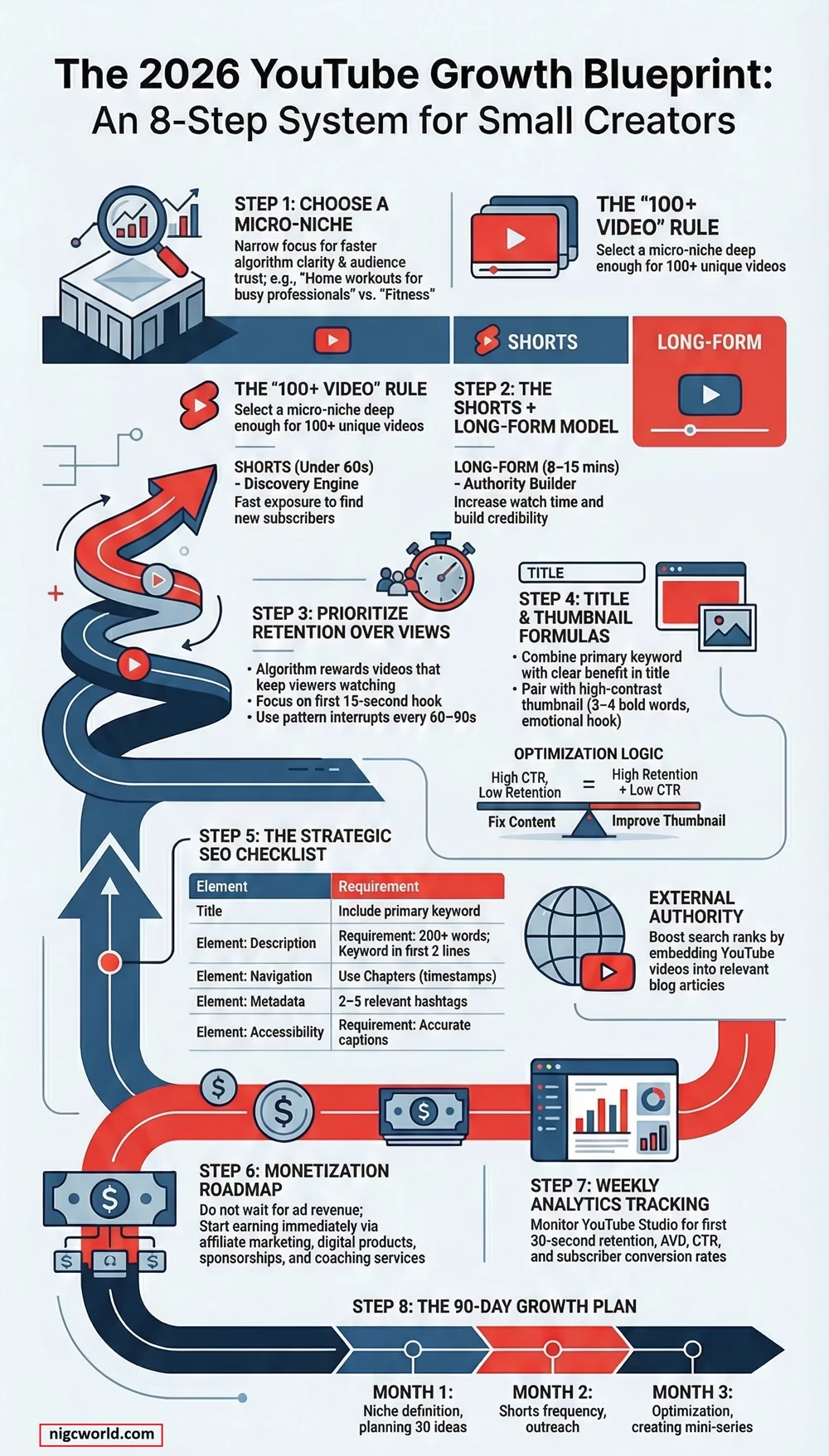
The YouTube Channel Growth Blueprint for 2026 is simple:
Micro-niche + Shorts funnel + Retention focus + SEO optimization + Monetization strategy.
Small creators who treat YouTube like a system — not a hobby — will win.
Frequently Asked Questions (FAQ)
How long does it take a small YouTube channel to grow?
It typically takes 3–6 months of consistent uploads and optimization to see noticeable growth.
Are Shorts necessary for small creators?
Yes. Shorts are one of the fastest ways to gain exposure and new subscribers.
How many videos should small creators upload weekly?
At least 1–2 long-form videos and 3–5 Shorts per week for steady growth.
Is YouTube still profitable for small channels in 2026?
Yes. Small channels can earn through affiliate marketing, digital products, sponsorships, and ad revenue once eligible.
What matters more: views or retention?
Retention matters more. Videos that keep viewers watching longer get promoted more often.


Disclosure: We are partners or associates of Amazon and other top brands. We may earn a small amount from qualifying purchases without increasing the price. Please read our full affiliate disclosure here.

