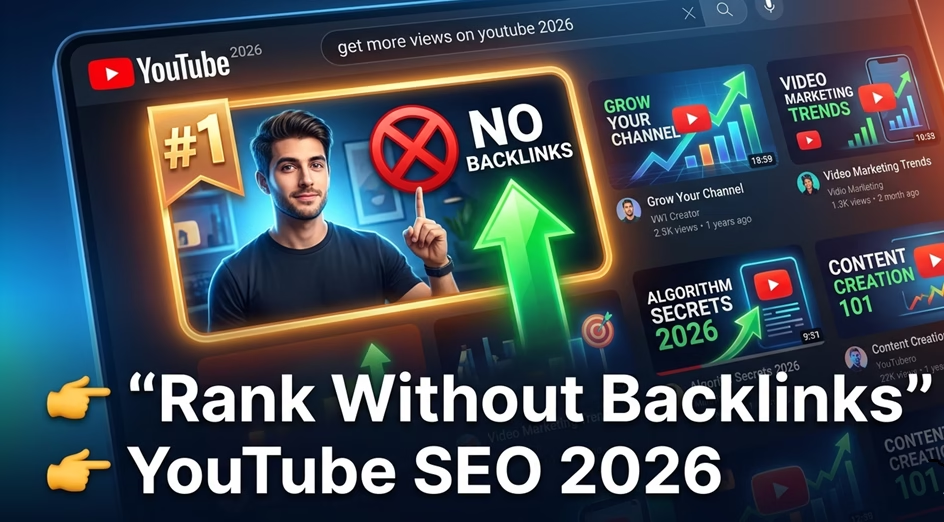
Many creators still think backlinks are the secret to ranking videos. That idea comes from traditional SEO, where links can influence how pages rank in Google. But YouTube works differently. On YouTube, your video can rank without backlinks if it performs well on the signals the platform actually cares about: click-through rate, watch time, retention, engagement, and relevance.
That is good news for small creators. It means you do not need a big website, a huge social presence, or link-building campaigns to grow. You need a smarter video strategy.
In this guide, you will learn how to rank YouTube videos without backlinks by focusing on the factors that matter most.
If you want a complete ranking strategy, read our YouTube SEO guide to understand how videos rank on page 1.
Why backlinks are not essential for YouTube ranking
Backlinks can help a video get extra traffic or viewers from outside YouTube, but they are not the main reason videos rank inside YouTube search or recommendations. YouTube wants to show viewers videos they are most likely to click, watch, and enjoy.
That means the platform looks closely at:
- whether people click your video
- how long they watch
- whether they stay engaged
- whether they keep watching more videos after yours
If your video satisfies viewers, YouTube has no reason to wait for backlinks.
For most creators, that means the real ranking work happens inside the video itself. Experienced YouTubers don’t worry about backlinks.
Table of Contents
Step 1: Choose a keyword with clear intent
The first step to ranking without backlinks is choosing the right topic. You need a keyword that people search for, but that is not too competitive for your channel size.
Good keywords usually have:
- a clear problem
- a specific audience
- searchable intent
- low to medium competition
Examples:
- youtube seo for beginners
- how to get first 1000 subscribers
- best free tools for youtube growth
Avoid topics that are too broad unless your channel already has strong authority. A small creator has a better chance of ranking for a specific query than a massive, general one.
Read this guide: How to Find Low Competition YouTube Topics
Step 2: Put the main keyword in the right places
Once you choose your topic, make it easy for YouTube to understand what the video is about.
Use the main keyword in:
- the title
- the first line of the description
- the spoken script
- the captions
- a chapter heading if relevant
But use the keywords naturally.
This helps YouTube connect your content to the search intent.
Step 3: Create a title that people actually click
A strong title does two jobs at once. It tells YouTube what the video is about, and it tells viewers why they should click.
Make sure your title has:
Keyword + benefit + specificity
For example, a good title example is “How Small Creators Can Rank Videos Without Backlinks“
Your title should be clear; don’t confuse users.
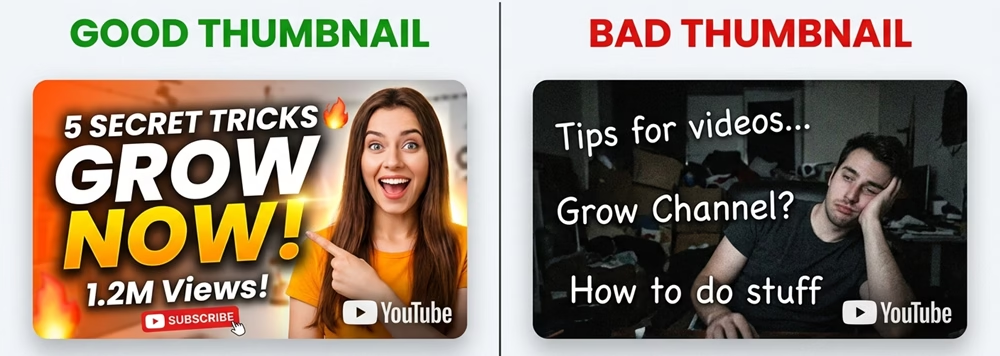
Step 4: Make a thumbnail that wins the click
If people do not click, your video cannot rank. Thumbnail performance matters because it affects click-through rate.
A strong thumbnail should:
- be simple
- use bold text
- show one clear idea
- create curiosity
- look good on mobile
The thumbnail and title must match. If the title makes a promise, the thumbnail should visually support it.
Step 5: Improve the first 15 seconds
Even if your video gets clicks, it will not rank well if viewers leave quickly. The first 15 seconds are critical.
Your opening should:
- state the result
- confirm the viewer is in the right place
- hint at the value ahead
- avoid a long intro
You should let viewers know the benefits of your video in the first 15 seconds.
You can say, “I will teach you how to use AI in your studies. Watch this video fully. By the end, you’ll exactly understand the 3 simple steps to score high in your exam.“
Your intro should be clear, direct, and useful.
To optimize your videos effectively, explore the best free tools for YouTube growth.
Step 6: Focus on watch time and retention
YouTube rewards videos that hold attention. That means your content must stay interesting from beginning to end.
To improve retention:
- remove unnecessary filler
- use short sections
- add examples
- use visual changes every few seconds
- keep pacing fast but understandable
- answer the viewer’s question early
A good video structure is:
- Hook
- Problem
- Step-by-step solution
- Example
- Summary
- Call to action
If viewers keep watching, YouTube sees your video as valuable.
Retention plays a huge role in growth. Learn how to scale your channel in our
complete YouTube growth guide.
Step 7: Write a strong description
Your description does more than fill space. It helps YouTube understand context and gives viewers more reasons to trust the video.
A strong description should:
- include the keyword naturally
- explain what the video covers
- add related terms
- include timestamps
- link to related videos or playlists
Tip: Examine some top-performing videos on YouTube and see how they craft their descriptions for their videos.
Do not stuff keywords. Write naturally and clearly.
Step 8: Use captions and spoken keywords
YouTube can understand your video better when your keyword appears in the spoken script. If you say the phrase naturally, it strengthens the topic signal.
For example, in a video about this article topic, say:
- “how to rank YouTube videos without backlinks”
- “YouTube SEO”
- “thumbnail optimization”
- “watch time”
- “retention”
Captions also help accessibility and can improve viewer understanding, especially for tutorial videos.
Step 9: Build topical relevance around the video
You may not need backlinks, but your video still needs context. The easiest way to do this is by building topic clusters.
If your video is about ranking without backlinks, it should link to related videos like:
- YouTube SEO Guide
- How to Rank Videos on Page 1 of YouTube
- How to Find Low-Competition YouTube Keywords
When you publish related videos, YouTube better understands your channel’s subject. That improves your overall ranking potential.
Step 10: Use playlists to strengthen session time
Playlists can help you rank because they keep viewers on your channel longer. If someone watches one related video after another, that sends a strong signal that your content is useful.
Create some playlists by grouping related videos from your existing videos.
Then add your video to the most relevant playlist and mention that playlist in the description and end screen.
Step 11: Drive internal traffic from your channel
One of the best ways to rank on YouTube is to use your own channel structure wisely.
Do this:
- link to related videos in the description
- use end screens
- use pinned comments
- mention the next video in the script
- build a logical sequence of videos
For example, if your video is about ranking without backlinks, link to videos like YouTube SEO or keyword research.
This creates a strong content path for viewers and keeps them inside your channel.
Step 12: Get early engagement
The first few hours after publishing matter a lot. If viewers comment, like, and keep watching, your video gets stronger signals early.
To improve early engagement:
- post when your audience is active
- reply to comments quickly
- pin a useful comment
- ask one clear question in the video or description
For example, ask like:
“Are you happy with this video?” and “Comment your opinion.”
That invites interaction without sounding forced.
Step 13: Refresh underperforming videos
If a video does not rank well at first, that does not mean it failed forever. You can improve it later.
Check:
- title
- thumbnail
- first 30 seconds
- description
- audience retention graph
If CTR is low, improve the thumbnail or title. If retention is low, improve the opening. If the topic is too broad, narrow it down.
Ranking is often the result of iteration, not one perfect upload.
Step 14: Use external traffic the smart way
This guide is about ranking without backlinks, but that does not mean you cannot use external traffic at all. The difference is that you do not rely on backlinks as a ranking strategy.
You can still share videos on:
- email newsletters
- blog posts
- communities
- social media
These sources can help your video get early views, which may improve performance. But the real ranking still comes from what viewers do on YouTube.
Step 15: Keep your niche focused
A channel that talks about everything will struggle to rank consistently. A focused channel builds authority faster.
If your channel is about:
- YouTube growth
- YouTube SEO
- creator tools
- channel strategy
then it becomes easier for YouTube to trust your future videos on similar topics.
Focused channels tend to rank faster because the platform can predict who should see them.
If you’re aiming for faster results, follow our step-by-step guide on getting your first 1,000 subscribers.
Common mistakes that stop ranking
Avoid these mistakes if you want to rank on YouTube:
- choosing overly broad keywords
- writing weak titles
- creating dull thumbnails
- ignoring retention
- stuffing descriptions with keywords
- uploading random topics
- skipping playlists and end screens
- not studying analytics
These mistakes hurt performance far more than not having backlinks.
Final thoughts
You can absolutely rank YouTube videos without backlinks. In fact, many small creators do it every day. The secret is to focus on the ranking signals YouTube actually uses: keyword relevance, click-through rate, watch time, retention, engagement, and channel consistency.
Backlinks are optional. Strong content is not.
If you create videos that people want to click and keep watching, YouTube will do the rest.
Pro Tip: Upload your videos regularly (daily, every two days, 5 days, or so). Your consistency helps your videos rank higher and get more views.
Frequently Asked Questions
Can YouTube videos rank without backlinks?
Yes. YouTube videos can rank without backlinks if they perform well in search and viewer engagement signals such as CTR, watch time, and retention.
Are backlinks useful for YouTube SEO?
Backlinks can bring external traffic, but they are not required for ranking videos inside YouTube.
What is the most important ranking factor on YouTube?
Watch time and audience retention are among the most important ranking factors because they show that viewers find the video valuable.
How do small channels rank videos without backlinks?
Small channels can rank by targeting low-competition keywords, using strong thumbnails and titles, and keeping viewers engaged throughout the video.



Disclosure: We are partners or associates of Amazon and other top brands. We may earn a small amount from qualifying purchases without increasing the price. Please read our full affiliate disclosure here.

